


Baby Sleeping on Stomach: Is It Safe? A Pediatrician Explains


Can Babies Sleep on Their Stomach?
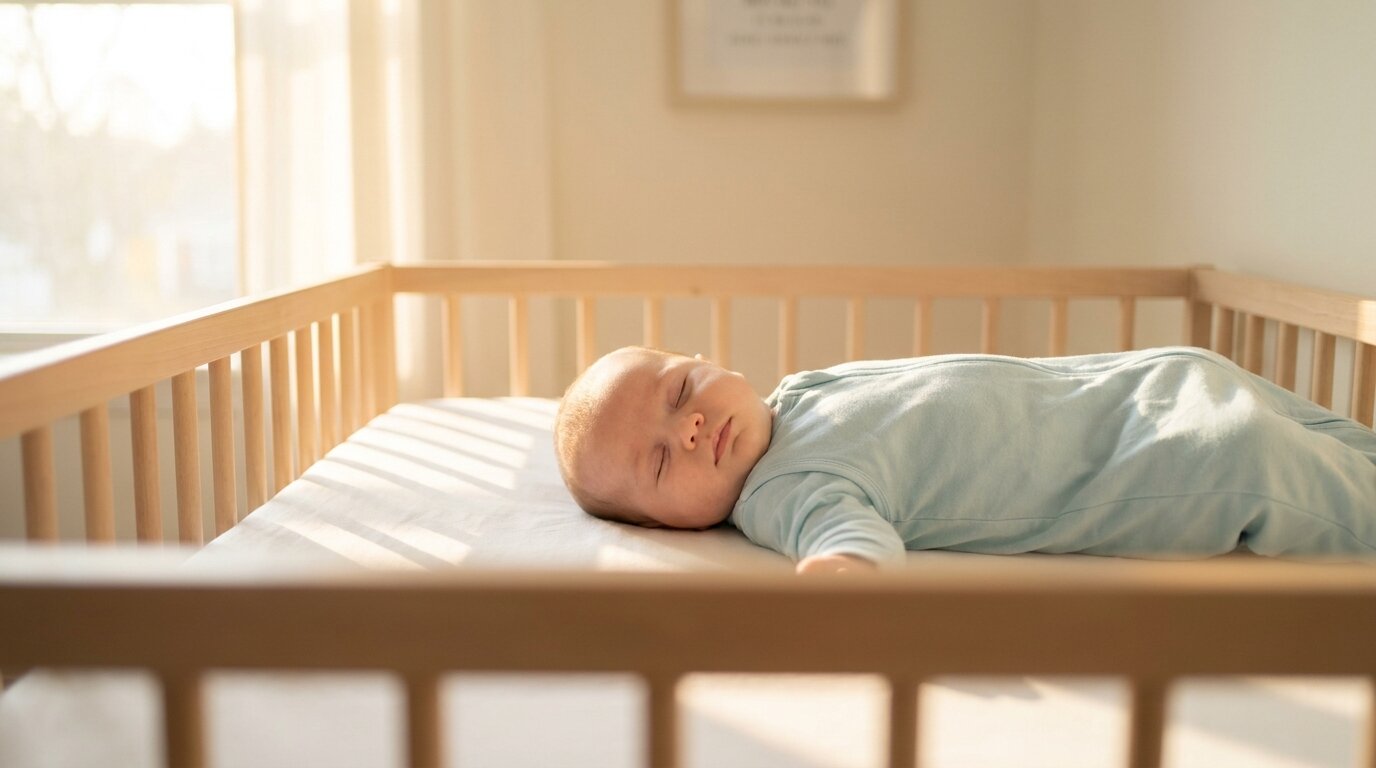
No, babies should not sleep on their stomach. The American Academy of Pediatrics recommends placing every baby on their back for all sleep, naps and nighttime, until their first birthday. Once a baby can roll both ways on their own, you do not need to reposition them, but always start them on their back.
"Infants should be placed for sleep in a supine position (wholly on the back) for every sleep by every caregiver until 1 year of age."
American Academy of Pediatrics, 2022 Safe Sleep Recommendations
Per the American Academy of Pediatrics' 2022 Safe Sleep recommendations, infants should be placed on their backs on a firm, flat, non-inclined sleep surface for every sleep until 12 months of age. (Moon RY et al., Pediatrics, 2022; doi:10.1542/peds.2022-057990)
Key Takeaways
- Always place your baby on their back to sleep, for naps and nighttime.
- Back sleeping has cut SIDS rates by more than 50% since the 1990s.
- Once your baby rolls both ways independently (usually around 4 to 6 months), they can stay on their stomach if they roll there on their own.
- A firm, flat mattress with no loose bedding is essential at every age.
- If you have concerns about your baby's sleep position, a Blueberry pediatrician can help, 24/7, from home.
Is It Safe for Babies to Sleep on Their Stomach?
Stomach sleeping is not safe for babies under 1 year old who cannot yet roll both ways on their own.
The AAP is clear: every baby should be placed on their back for every sleep. This applies to naps, nighttime, and any other time your baby is sleeping, even short rest periods. Stomach sleeping raises the risk of SIDS, which is the sudden, unexplained death of a baby under 1 year of age.
Research shows that babies who usually sleep on their backs but are placed on their stomachs even once face an especially high risk. The AAP 2022 technical report cites studies finding that babies in this situation face a sharply elevated SIDS risk, with literature estimates ranging from about 8.7 to 45.4 times higher than babies who always sleep on their backs (Moon et al., Pediatrics, 2022, technical report). Even a single night of stomach sleeping by an unfamiliar caregiver can be dangerous. This is why consistency matters, and why every caregiver in your baby's life needs to follow the same rule.
Why Back Sleeping Is Recommended
Back sleeping is the gold standard for infant sleep safety, backed by decades of research.
In 1994, the National Institutes of Health launched the "Back to Sleep" campaign urging parents to place babies on their backs. The results were dramatic. SIDS rates in the United States dropped by more than 50% (NIH/NICHD Safe to Sleep Campaign). It remains one of the most successful public health interventions in modern pediatrics.
Here's why back sleeping is safer:
- Airway protection. When a baby sleeps on their back, the trachea (windpipe) sits above the esophagus. This position actually helps prevent choking, even for babies with reflux (AAP, 2022).
- Better arousal response. Babies who sleep on their backs are more easily roused from sleep, which helps them respond if their breathing is briefly interrupted.
- Lower suffocation risk. Stomach sleeping can press a baby's face into the mattress, restricting airflow. Babies who haven't developed strong neck muscles may not be able to turn their head to breathe freely.
The AAP's 2022 guidelines are firm: back sleeping is recommended for every sleep, every time, until age 1, including for babies with reflux (also called GERD). Side sleeping is also not recommended, as babies can easily roll onto their stomachs from their side.
What If My Baby Rolls Onto Their Stomach?
If your baby rolls onto their stomach during sleep and can roll both ways, it's okay to let them stay.
Many parents panic the first time they check the monitor and see their baby face-down. Here's the good news: once your baby has the strength and coordination to roll from back to tummy and tummy to back, the risk drops significantly.
Most babies start rolling between 4 and 6 months of age. At this stage, they've built up the neck, shoulder, and arm strength needed to lift their head and shift position if their airway is blocked.
What to do when your baby starts rolling:
- Still place them on their back at the start of every sleep.
- If they roll onto their stomach on their own, you don't need to flip them back.
- Make sure the crib is completely bare. No blankets, pillows, bumper pads, or stuffed animals.
Stop swaddling at the first sign of rolling
Stop swaddling as soon as your baby shows signs of trying to roll, usually around 3 to 4 months. A swaddled baby who rolls face-down cannot use their arms to push up.
If your baby cannot yet roll both ways independently (typically younger than about 4 months) and somehow ends up on their stomach, gently roll them back. Babies who cannot yet roll both ways typically lack the motor skills to protect their airway when placed on their stomach.
Signs Your Baby Is Ready to Sleep on Their Stomach
Look for consistent, independent rolling in both directions before relaxing about sleep position.
There's no single age that's "safe" for all babies. Instead, watch for these developmental milestones:
- Rolling from back to tummy. Your baby pushes up and flips over without help.
- Rolling from tummy to back. Your baby can return to their back on their own. This is the critical skill for airway safety during sleep.
- Strong head control. During tummy time, your baby lifts their head high and turns it side to side easily.
- Pushing up on arms. Your baby can press up on extended arms during tummy time, showing upper body strength.
Most babies reach these both-way rolling milestones between 4 and 6 months, but every child develops at their own pace. If your baby was born prematurely, milestones may come later. A pediatrician can help you assess your baby's readiness.
A note about tummy time: supervised, awake tummy time is different from stomach sleeping. The AAP recommends starting tummy time right after your baby comes home from the hospital, beginning with 3 to 5 minutes, 2 to 3 times a day. By 3 months, aim for about 60 minutes total each day (Pathways.org; WHO Global Guidelines on Physical Activity, 2019). Tummy time builds the exact muscles your baby needs to roll and protect their airway.
Safe Sleep Tips for Every Age
A safe sleep environment is just as important as back sleeping.
Even after your baby can roll, the sleep space needs to stay safe. Follow these AAP-recommended guidelines:
- Firm, flat mattress. Use a CPSC-approved crib, bassinet, or play yard. The mattress should not indent when your baby lies on it.
- Nothing in the crib. Remove all blankets, pillows, quilts, bumper pads, stuffed animals, and sheepskins. A bare crib is a safe crib.
- Use a sleep sack. Instead of loose blankets, dress your baby in a wearable blanket or sleep sack. Choose one appropriate for the room temperature. Avoid weighted sleep sacks or weighted swaddles, as the AAP advises against them due to insufficient safety evidence.
- Watch for overheating. The AAP advises dressing your baby in no more than one extra layer of clothing compared with what an adult would wear, and avoiding heavy blankets or overly warm rooms. Signs of overheating include sweating and a hot chest.
Do not use inclined sleepers or sleep positioners
Never use inclined sleepers, baby hammocks, or sleep positioners. These have been banned by the CPSC due to suffocation risk.
Room sharing (not bed sharing). The AAP recommends keeping your baby's sleep space in your room for at least the first 6 months (the 2022 policy no longer affirmatively recommends room sharing up to 12 months; the prior 2016 policy did). Room sharing lowers SIDS risk significantly. When combined with back sleeping, breastfeeding, and a smoke-free home, the predicted SIDS rate is about 0.08 per 1,000 live births (Moon et al., Pediatrics, 2022, technical report).
Do not bed-share
Bed sharing is not safe, especially if either parent smokes, has consumed alcohol, or is on sedating medications. Keep your baby in their own crib, bassinet, or play yard.
Additional protective steps:
- Offer a pacifier at sleep time. Research suggests pacifiers may help babies maintain open airways and stay more easily arousable. The protective effect holds even if the pacifier falls out after your baby falls asleep (AAP, 2022).
- Breastfeed if possible. Any amount of breastfeeding reduces SIDS risk. At least 2 months of exclusive breastfeeding offers the strongest protection (AAP, 2022).
- Keep up with vaccines. Staying current on immunizations has been shown to lower SIDS risk.
- Avoid smoke exposure. Maternal smoking, during pregnancy and after birth, is one of the strongest risk factors for SIDS.
When to Talk to Your Pediatrician
Reach out if you notice anything unusual about your baby's breathing or sleep patterns.
Most babies sleep safely with basic back-sleeping and safe sleep practices. But contact your pediatrician if you notice:
- Your baby consistently struggles to breathe during sleep (noisy breathing, pauses, or gasping).
- Your baby hasn't started rolling by 6 months.
- Your baby was born prematurely or had a low birth weight. These babies may need extra monitoring.
- You have questions about safe sleep for a baby with reflux, a medical condition, or special needs.
- A secondary caregiver (grandparent, daycare, babysitter) isn't following safe sleep guidelines.
Remember: the risk of SIDS increases dramatically when a baby who normally sleeps on their back is placed on their stomach by an unfamiliar caregiver. Make sure everyone who cares for your baby knows the rules.
Have questions about your baby's sleep position?
Talk to a PediatricianWith Blueberry Pediatrics, you can connect with a board-certified pediatrician anytime, day or night, from the comfort of home. Whether it's 2 a.m. and you're worried about your baby's sleep position or you just want a professional to walk you through safe sleep setup, we're here for you.
Frequently Asked Questions
When can a baby sleep on their stomach?
A baby can be left on their stomach to sleep only once they can roll both ways on their own, from back-to-tummy and tummy-to-back, which most babies do between 4 and 6 months. Even then, always place your baby on their back to start every sleep. You simply don't need to reposition them if they roll on their own. The AAP advises back sleeping for all sleep until age 1.
Can a 5-month-old sleep on their tummy?
Only if your 5-month-old can roll both ways independently. If they can, and they roll to their tummy during sleep, it's okay to leave them. Just always start them on their back and keep the crib bare. If they cannot yet roll both ways, gently return them to their back.
Is it safe if my baby rolls onto their stomach while sleeping?
If your baby can roll both directions on their own, you do not need to flip them back. The AAP says you can let them stay in the position they assume. Keep placing them on their back to begin sleep, and remove all soft bedding, pillows, and bumpers. If your baby is younger than about 4 months and can't yet roll both ways, gently roll them back to their back.
When is it safe for a baby to sleep on their stomach?
There is no age before which stomach sleeping is "recommended." Back sleeping is the only position the AAP endorses until 12 months. The transition is governed by a milestone, not a birthday: independent rolling both ways, typically 4 to 6 months.
Can newborns sleep on their stomach?
No. Newborns must always be placed on their back for every sleep. Newborns cannot roll, and being placed on the stomach carries a sharply elevated SIDS risk in this age group.
What is the difference between tummy time and stomach sleeping?
Tummy time is awake, supervised play on the stomach that builds neck, shoulder, and trunk strength, with an adult watching the whole time. Stomach sleeping is unsupervised and unsafe before a baby can roll both ways. The two are not the same: tummy time is encouraged from the first days home, while stomach sleeping is not.
What should I do if my baby rolls onto their stomach and can't roll back?
If your baby rolled to their stomach but can't yet roll back to their back, gently return them to their back. Once they can roll both ways reliably, you no longer need to reposition them.
When should I stop swaddling?
Stop swaddling as soon as your baby shows any sign of trying to roll, usually around 3 to 4 months, sometimes earlier. A swaddled baby who rolls face-down cannot use their arms to push up, which is dangerous.
Medical Disclaimer
This article is for informational purposes only and does not constitute medical advice. Every baby is different. Always consult your pediatrician before making changes to your child's sleep routine. If you have an emergency, call 911 or go to your nearest emergency room.
Sources
- Moon RY, Carlin RF, Hand I, et al. "Sleep-Related Infant Deaths: Updated 2022 Recommendations for Reducing Infant Deaths in the Sleep Environment." Pediatrics. 2022;150(1):e2022057990. doi:10.1542/peds.2022-057990. (PMID 35726558)
- Moon RY, Carlin RF, Hand I, et al. "Evidence Base for 2022 Updated Recommendations for a Safe Infant Sleeping Environment to Reduce the Risk of Sleep-Related Infant Deaths." Pediatrics. 2022;150(1):e2022057991. doi:10.1542/peds.2022-057991.
- National Institutes of Health, Eunice Kennedy Shriver National Institute of Child Health and Human Development. "Safe to Sleep" Campaign. https://safetosleep.nichd.nih.gov/
- American Academy of Pediatrics. "A Parent's Guide to Safe Sleep." HealthyChildren.org.
- Centers for Disease Control and Prevention. "Sudden Unexpected Infant Death and Sudden Infant Death Syndrome: Data and Statistics." https://www.cdc.gov/sudden-infant-death/about/
- Pathways.org. "Tummy Time." https://pathways.org/topics-of-development/tummy-time
- World Health Organization. "Guidelines on Physical Activity, Sedentary Behaviour and Sleep for Children Under 5 Years of Age." Geneva: WHO; 2019.

.svg)





.svg)
.svg)

