


Hand, Foot and Mouth Disease: A Pediatrician's Guide for Parents


What Is Hand, Foot and Mouth Disease?
Hand, foot and mouth disease (HFMD) is a mild viral illness in young children, causing mouth sores and a rash on the hands, feet, and buttocks. Most kids recover at home in 7 to 10 days. Call your pediatrician if your child cannot drink, has fever lasting more than 3 days, or has fever in a baby under 3 months.
Key Takeaways
- HFMD is caused by a group of viruses called enteroviruses. The most common one in the United States is coxsackievirus A16. A newer strain, coxsackievirus A6, has been causing more severe-looking cases in older kids and even adults since around 2008.
- The classic signs are a low fever and sore throat for a day or two, followed by tiny blisters in the mouth and a flat or slightly raised red rash on the palms, soles, and sometimes the buttocks.
- Most children recover at home in 7 to 10 days. There is no specific medicine for HFMD. Antibiotics do not help because HFMD is viral.
- The biggest risk is dehydration from painful mouth sores. The most important thing parents can do is keep their child drinking.
When to Call Your Pediatrician
Most cases of HFMD do not need an emergency visit, but a few warning signs should prompt a call.
Call your pediatrician or Blueberry (available 24/7) if your child has:
- A fever that lasts more than 3 days.
- Any rectal temperature of 100.4 °F or higher in a baby under 3 months old (rectal is the only reliable route at this age).
- Refused to drink fluids for more than 8 hours, or is making fewer than 4 wet diapers a day (infants) or has not urinated for 8 or more hours (older kids).
- No tears when crying, dry mouth, or sunken eyes.
- Symptoms that are getting worse instead of better after 7 to 10 days.
- A rash that becomes painful or looks infected, with red streaks, pus, or spreading swelling.
- A rash that looks unusually severe, especially if your child also has eczema (this needs a clinical eye to rule out a more serious skin infection).
Not sure if your child's symptoms need a call?
Start a visitWhen to Go to the ER
Call 911 or go to the emergency room if your child:
- Looks severely dehydrated (no urination for 12 or more hours, very limp, sunken soft spot on a baby's head).
- Is unusually sleepy, limp, or hard to wake up.
- Has a stiff neck, severe headache, or persistent vomiting.
- Has a seizure.
- Is having trouble breathing.
- Suddenly cannot move an arm or leg, or feels weak in the limbs.
These signs are very rare with HFMD but warrant immediate care at any age.
What Causes Hand, Foot and Mouth Disease?
HFMD is a viral infection that mostly affects babies and children younger than 5. The official CDC description is "a common illness that usually causes fever, mouth sores, and skin rash." Adults and older children can catch it too, especially if they have not been exposed to the specific strain before.
Which Virus Causes HFMD?
HFMD is caused by a family of viruses called enteroviruses. Three strains do most of the work:
- Coxsackievirus A16. This is the most common cause of HFMD in the United States. It usually produces the classic mild illness most parents recognize.
- Coxsackievirus A6. A newer strain that has been causing more severe-looking cases since around 2008 (first identified in Finland, with the first U.S. outbreaks reported in 2011 to 2012). It tends to cause a more widespread rash and is more likely to lead to nail shedding several weeks later.
- Enterovirus 71 (EV-A71). Uncommon in the U.S., but more common in East and Southeast Asia. It is associated with rare but serious complications like viral meningitis, encephalitis (swelling of the brain), and a polio-like condition called acute flaccid myelitis.
For most U.S. families, HFMD means a coxsackievirus A16 or A6 illness.
Symptoms of HFMD
Early Warning Signs
HFMD almost always starts looking like a regular cold. For the first day or two, you might see:
- A low fever.
- A sore throat (a baby may refuse the bottle or breast).
- A runny nose or stuffy nose.
- Less appetite or general fussiness.
The HFMD pattern becomes clearer 1 to 2 days later, when the mouth sores and rash appear.
The Rash and Mouth Sores
The mouth. Small red spots show up first, usually on the tongue and inside the cheeks. They turn into painful blisters or yellow-bordered ulcers. AAP describes them as "tiny blisters in the mouth, inner cheeks, gums, tongue sides, and roof of the mouth." This is the part that hurts and the part that drives the visits to our clinic, because kids stop wanting to eat or drink.
The rash on the body. The CDC describes the HFMD rash as "flat or slightly raised red spots, sometimes with blisters that have an area of redness at their base." The classic locations are:
- Palms of the hands.
- Soles of the feet.
- Buttocks (very common, even though many parents do not connect a diaper-area rash with HFMD).
- Arms, legs, and around the mouth (especially with the coxsackievirus A6 strain).
- The HFMD rash is usually not itchy. That helps tell it apart from eczema, chickenpox, or an allergic rash.
How Long Do Symptoms Last?
The illness usually runs 7 to 10 days:
- Days 1 to 2. Fever, sore throat, fussiness.
- Days 2 to 4. Mouth sores and rash appear. This is when discomfort peaks and most parents call us.
- Days 5 to 7. Fever resolves; rash starts to fade.
- Days 7 to 10. Skin clears, energy returns.
- 1 to 2 weeks after illness. Some kids have harmless peeling on their fingers and toes.
- 4 to 8 weeks after illness. Some kids (more often after coxsackievirus A6) shed a fingernail or toenail. See the "Will my child's nails fall off?" section below.
Atypical HFMD: The Coxsackievirus A6 Strain
If your child's HFMD looks worse than typical pictures, the coxsackievirus A6 strain may be the cause. A6 tends to produce:
- A more widespread rash, sometimes on the trunk, around the mouth, on the genitalia, and on the buttocks (not just the hands, feet, and inside the mouth).
- Larger blisters or bullous (blister-like) lesions.
- A "rash on top of a rash" pattern in children with eczema, sometimes called "eczema coxsackium," where the rash favors areas of eczema. If your child has eczema and the rash looks dramatic, call your pediatrician right away. A clinician needs to rule out a more serious skin infection called eczema herpeticum.
- HFMD in older children and even adults.
- A higher chance of nail shedding several weeks later.
Even with a more dramatic rash, A6 illness is still usually self-limited and treated with the same comfort-care approach.
How to Treat HFMD at Home
There is no specific medicine for HFMD. Care is comfort care: control the pain, keep your child drinking, and give the illness time. Antibiotics will not help because HFMD is caused by a virus.
Pain and Fever
- Acetaminophen (Tylenol). Every 4 to 6 hours, up to 5 doses in 24 hours per AAP HealthyChildren; see our baby Tylenol dosing guide for weights. Infants under 3 months with any rectal fever of 100.4 °F or higher need to be seen right away.
- Ibuprofen (Motrin, Advil). For children 6 months and older, every 6 to 8 hours, up to 4 doses in 24 hours per AAP. Do not give ibuprofen to babies under 6 months unless your pediatrician says to.
- Avoid aspirin in children with viral illness because of the risk of Reye syndrome.
- Skip benzocaine numbing gels in children under 2. The FDA warns they can cause methemoglobinemia, a serious blood condition.
For severe mouth pain, your pediatrician may prescribe a special mouth rinse ("magic mouthwash"). Do not try to mix one at home.
Hydration
This is the single most important job during HFMD. Mouth sores hurt, kids stop wanting to drink, and dehydration is the main reason kids land in the ER.
Tips that help:
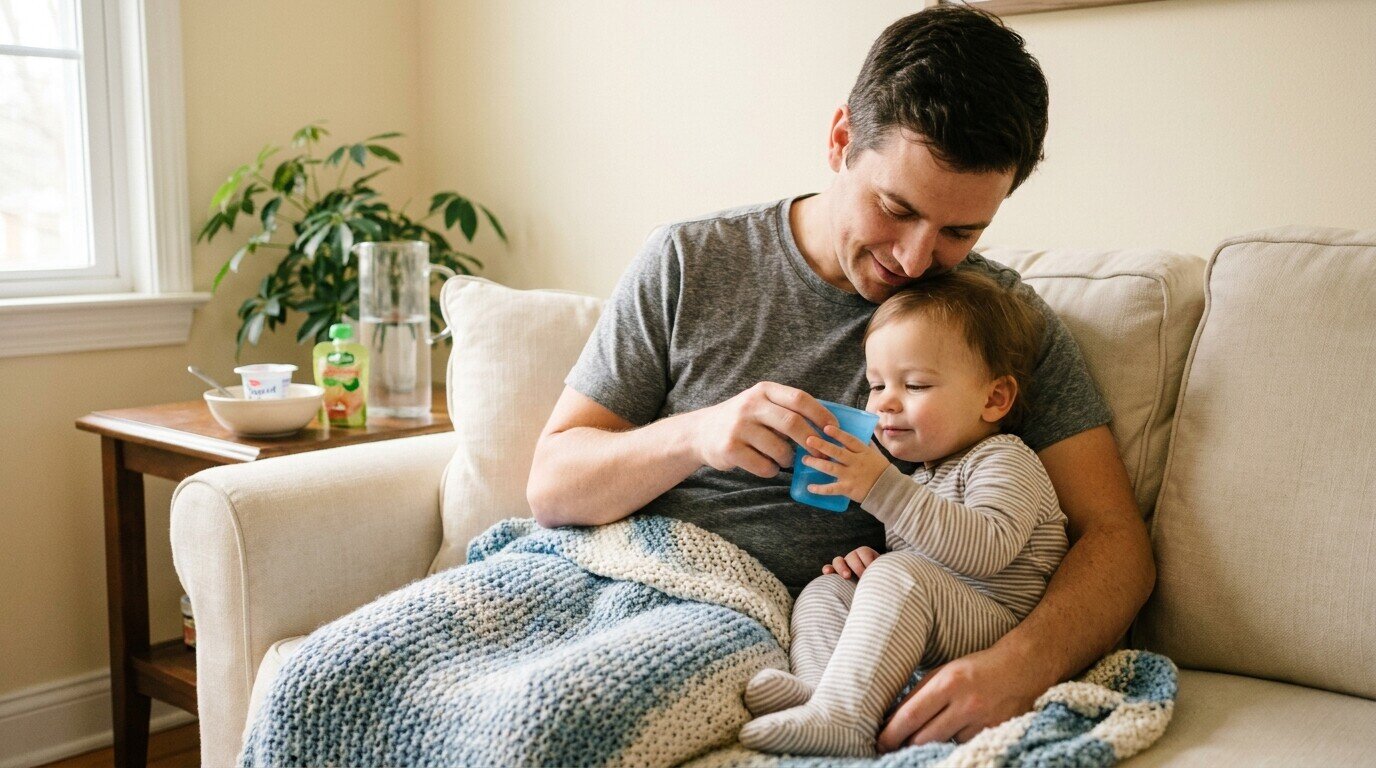
- Cold beats warm. Cold fluids and cold foods numb the mouth sores. Popsicles, frozen yogurt tubes, smoothies, ice chips, cold milk, and cold water all work.
- Small sips, often. Aim for a few sips every 10 to 15 minutes instead of a big cup at once.
- Pedialyte or another oral rehydration solution is fine if your child is not drinking enough.
- Skip acidic drinks like orange juice or lemonade. They sting mouth sores.
- Track wet diapers (babies) or trips to the bathroom (older kids). Fewer than 4 wet diapers a day, or no urination for 8 hours, is a reason to call.
Caring for the Rash
- Do not pop or pierce blisters. Let them dry on their own.
- The rash is usually not itchy, so anti-itch creams are not needed.
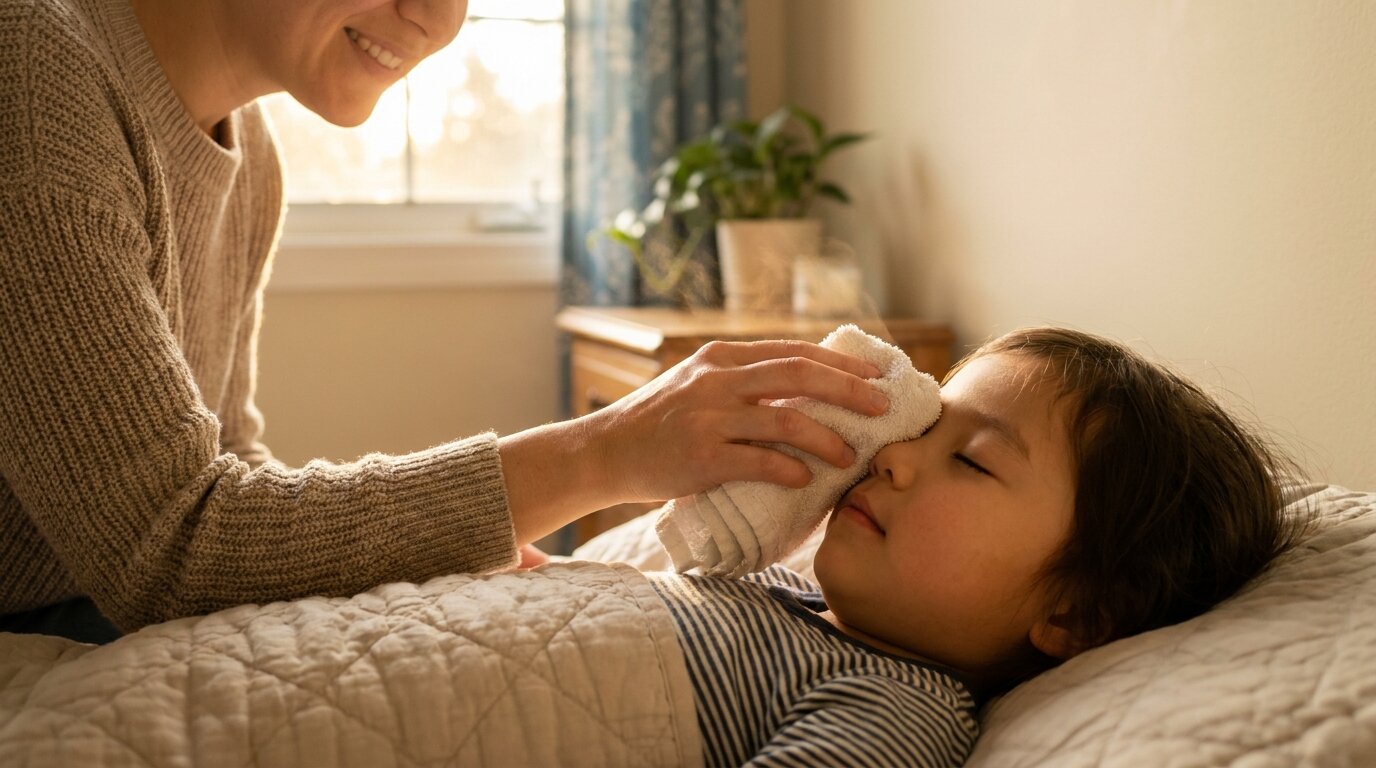
- Cool compresses and loose clothing can ease any discomfort.
- Wash your hands after any contact with the rash or with anything the blisters touched, because the fluid inside contains the virus.
When Can My Child Go Back to Daycare or School?
The AAP "Managing Infectious Diseases" standard, which most pediatricians and many daycares follow, is functional, not visual. Most kids can return when:
- They have no fever (without using fever-reducing medicine).
- They can comfortably take part in normal daycare activities.
- They are not drooling uncontrollably from open mouth sores.
The rash and lingering blisters do not have to be fully gone before your child can return.
Is HFMD Contagious? (Yes, Here's How Long)
Yes. Your child is most contagious during the first week of illness, when fever and rash are present. The virus can keep shedding in stool for several weeks after recovery, which is why handwashing matters even after your child looks and feels better.
How HFMD Spreads (and How to Prevent It)
The virus spreads through:
- Respiratory droplets (coughing, sneezing, talking).
- Direct contact with blister fluid or mouth saliva.
- Stool, including residue on diapers, surfaces, hands, and toys.
- Shared cups, utensils, food, and toothbrushes.
To reduce spread at home and at daycare:
- Wash hands for at least 20 seconds with soap and water. This is the single most effective prevention. Hand sanitizer is helpful but soap and water work better for enteroviruses.
- Wash hands especially after diaper changes, after using the bathroom, before eating, and after caring for a sick child.
- Disinfect frequently-touched surfaces and shared toys while your child is sick.
- Avoid close contact (kissing, hugging, sharing food and drinks) with sick children when you can.
- Keep your child's cups, utensils, and toothbrush separate from siblings' during the illness.
- Cough and sneeze into the elbow or a tissue.
- Try to keep the sick child a bit separate from siblings, especially infants under 6 months.
Will My Child's Nails Fall Off After HFMD?
Sometimes. It is called onychomadesis (on-ick-oh-MAH-deh-sis), and it is a known, harmless complication of HFMD. It is more common after the coxsackievirus A6 strain (around 37 out of 100 kids) than after non-A6 strains, including A16 (around 5 out of 100 kids per Hardy et al. 2016).
Here is what to expect:
- Nails usually start lifting at the base 4 to 8 weeks after the illness (about 1 to 2 months later).
- The old nail falls off without pain.
- A new nail grows in completely within 1 to 4 months.
- No treatment is needed.
Note: nail shedding is different from the skin peeling some kids get on their fingers and toes 1 to 2 weeks after HFMD. Skin peeling is just the top layer of skin coming off as the rash resolves. Onychomadesis is the actual nail separating from the bed weeks later. Both are harmless.
Frequently Asked Questions
Can adults get hand, foot and mouth disease?
Yes. HFMD is most common in children under 5, but adults can get it, especially if their immune system has not seen that particular strain before. Adult HFMD is usually milder than in children but can have a more widespread rash, particularly with the coxsackievirus A6 strain.
Can my child get HFMD more than once?
Yes. There are multiple strains (coxsackievirus A16, A6, enterovirus 71, and others). Catching one strain does not protect against the others. Even with the same strain, immunity weakens over time, so re-infection later in life is possible.
How long is my child contagious with HFMD?
Your child is most contagious during the first week of illness, when the fever and rash are present. The virus can keep shedding in stool for several weeks after recovery, which is why handwashing still matters even after your child looks and feels better.
Is HFMD the same as foot-and-mouth disease in animals?
No. They sound similar but are caused by different viruses. The animal disease (foot-and-mouth disease) does not infect humans, and HFMD does not affect livestock.
Is there a vaccine for HFMD?
The United States has no HFMD vaccine. China has licensed three enterovirus 71-specific vaccines, but those only cover EV-A71, not the coxsackievirus strains that cause most U.S. cases. The best prevention is good handwashing.
I am pregnant and my older child has HFMD. Is it dangerous to my baby?
Mention the exposure to your OB, especially if you become symptomatic within about a week of your due date. Pregnancy risk is low overall, but newborns infected around the time of delivery can rarely develop neonatal enterovirus disease (a sepsis-like illness that may include myocarditis or meningoencephalitis). Infected newborns can become very ill. Your OB or pediatrician can advise on any extra newborn monitoring.
Why does HFMD hit so hard in summer and fall?
Enteroviruses tend to circulate most in late summer and early fall in temperate climates. Add daycare, camp, and pool season, and you have a recipe for spread.
Should I worry about a rash on my child's bottom or genitals?
A rash on the buttocks is very common with HFMD and is often missed by parents who do not connect a diaper-area rash with the illness. A rash that includes the genitalia is more typical of the coxsackievirus A6 strain. It is not dangerous, but call your pediatrician if it is severe, painful, or if you are not sure what you are looking at.
When to Talk to a Pediatrician
If your child has HFMD and you are not sure what to do next, a pediatrician can help you decide whether your child is hydrated enough, when daycare return is appropriate, and whether anything needs an in-person visit.
Have questions about your child's symptoms?
Start a visitMedical Disclaimer
This article is for general education and is not medical advice. Always talk to your child's pediatrician about your child's specific symptoms. If your child is severely dehydrated, unusually sleepy or hard to wake, having trouble breathing, has a stiff neck, severe headache, repeated vomiting, or a seizure, call 911 or go to the emergency room immediately.
Sources
Centers for Disease Control and Prevention. About Hand, Foot, and Mouth Disease. Reviewed 2024-05-07. https://www.cdc.gov/hand-foot-mouth/about/index.html
Centers for Disease Control and Prevention. Hand, Foot, and Mouth Disease: Signs & Symptoms. Reviewed 2024-05-07. https://www.cdc.gov/hand-foot-mouth/signs-symptoms/index.html
Centers for Disease Control and Prevention. Hand, Foot, and Mouth Disease: Causes. Reviewed 2024-05-07. https://www.cdc.gov/hand-foot-mouth/causes/index.html
Centers for Disease Control and Prevention. About Enterovirus A71. Reviewed 2024-04-23. https://www.cdc.gov/non-polio-enterovirus/about/about-enterovirus-a-71.html
Centers for Disease Control and Prevention. CDC Yellow Book 2024: Hand, Foot, and Mouth Disease. https://www.cdc.gov/yellow-book/index.html
American Academy of Pediatrics. HealthyChildren.org. Hand-Foot-and-Mouth Disease. Reviewed 2025-12-15 (Sabiha R. Hussain, MD, FAAP). https://www.healthychildren.org/English/health-issues/conditions/infections/Pages/Hand-Foot-and-Mouth-Disease.aspx
American Academy of Pediatrics. HealthyChildren.org. Coxsackieviruses and Other Enterovirus Infections. Reviewed 2021-09-22. https://www.healthychildren.org/English/health-issues/conditions/infections/Pages/Coxsackieviruses-and-Other-Enterovirus-Infections.aspx
American Academy of Pediatrics. HealthyChildren.org. Acetaminophen for Fever and Pain. Reviewed 2026-01-30. https://www.healthychildren.org/English/safety-prevention/at-home/medication-safety/Pages/Acetaminophen-for-Fever-and-Pain.aspx
American Academy of Pediatrics. Managing Infectious Diseases in Child Care and Schools.
Hardy M et al. Onychomadesis Following Hand, Foot, and Mouth Disease. J Pediatr. 2016. https://pmc.ncbi.nlm.nih.gov/articles/PMC6630444/
Centers for Disease Control and Prevention. MMWR Vol. 61 No. 12: Notes from the Field, Severe Hand, Foot, and Mouth Disease Associated with Coxsackievirus A6, November 2011 to February 2012. Published 2012-03-30. https://www.cdc.gov/mmwr/preview/mmwrhtml/mm6112a5.htm
Centers for Disease Control and Prevention. MMWR: Atypical Hand, Foot, and Mouth Disease Associated with Coxsackievirus A6, Minnesota, 2014. Published 2015-07-31. https://pmc.ncbi.nlm.nih.gov/articles/PMC4584838/
DermNet. Hand, foot, and mouth disease. Updated 2022-08. https://dermnetnz.org/topics/hand-foot-and-mouth-disease


.svg)




.svg)
.svg)

