


Rapid Strep Test Guide: Answers from a Pediatrician


It's no secret: children become sick quickly and often, and a sore throat is one of the most common indicators that your child has an infection.
Accompanying symptoms, such as cough, runny nose, or hoarse voice, may suggest your child has a viral infection, like the common cold or flu.
But if your child experiences symptoms such as painful swallowing, red and swollen tonsils, white patches on the tonsils, or swollen lymph nodes in the front of their neck - they may have contracted strep throat.
If you believe your child has strep throat, your next step is to confirm with a strep test. Luckily, Blueberry Pediatricians can help. Keep reading to learn all about rapid strep tests: how they work, their accuracy, where to buy them, and what to do if your child's test results are positive.
What is strep throat?
Strep throat is a bacterial infection that affects people of all ages but is especially common among children aged 5 to 15. Strep throat is differentiated from other sore throats by the lack of a cough and the presence of specific symptoms:
- Fever
- Chills
- Sore throat
- White patches on the tonsils
- Pain when swallowing
- Swollen neck glands
- Bright red tongue
- Trouble swallowing
- Little red spots on the roof of the mouth
How do you diagnose strep throat?
A rapid strep test and a throat culture are the two most common tests for diagnosing a strep infection. These tests are performed to identify the presence of Group A Streptococcus bacteria, which is responsible for causing strep throat. Both tests are valuable tools in diagnosing strep infections and guiding appropriate treatment.
What is a rapid strep test?
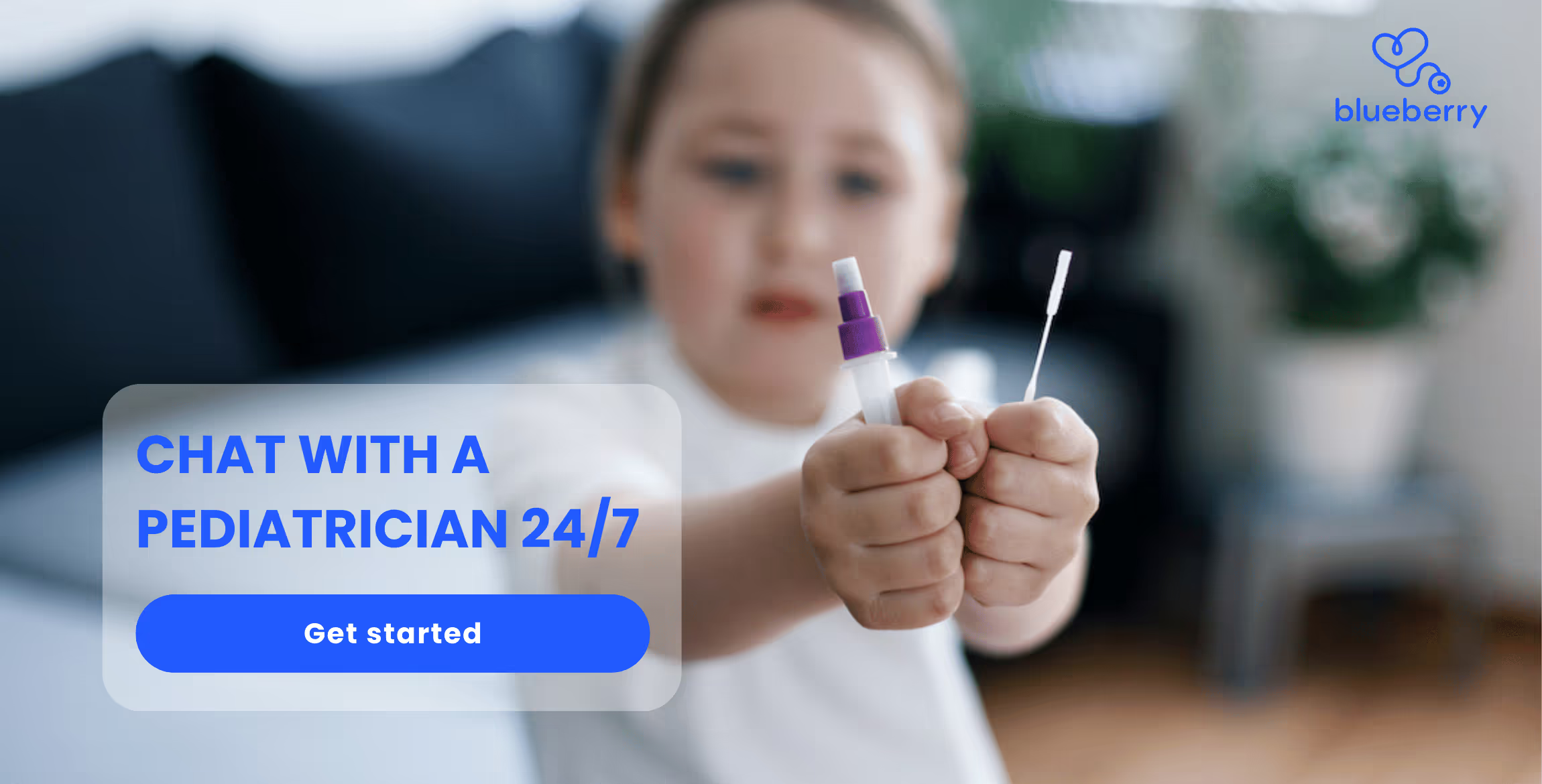
A rapid strep test uses a throat swab to collect saliva from the back of the throat and tonsils. Within minutes, it detects antigens (surface proteins or pieces of the bacteria) unique to Group A Streptococcus bacteria.
How does a rapid strep test differ from a throat culture?
A throat culture can only be performed at a doctor's office. It involves collecting a sample from the throat and incubating it in a laboratory setting to allow the bacteria to grow. It typically requires 24-48 hours for a result. A positive culture means there are live Group A Streptococcus in the sample.
.png)
Need a strep test for your child?
Talk to a pediatricianAre rapid strep tests FDA-approved?
Rapid strep tests are “medical devices” which are “cleared” (not “approved”) by FDA. Critically, rapid strep tests are also “prescription devices,” so under FDA’s rules they must be prescribed by a licensed medical practitioner before being used on a patient.
How accurate are rapid strep tests?
While throat cultures are the most accurate of the two tests, studies have confirmed that rapid strep tests are accurate and reliable for diagnosing strep throat.
What happens if a strep test is positive?
If your child had a strep test and the results were positive, your child will need to be treated by a physician. For more information about treatment options for strep, please see our discussion earlier on this page.
Want to skip the in-office visit? Blueberry Pediatrics members can message the pediatric team through the easy-to-use, HIPAA-compliant app to schedule a visit with a Blueberry Pediatrics licensed pediatrician. Your Blueberry Pediatrics licensed pediatrician can prescribe and virtually administer a rapid strep test. Based on the results and your child's other symptoms, a pediatrician will advise treatment.
Worried it might be strep?
Talk to a pediatricianWhat happens if a rapid strep test is negative?
Negative test results should be confirmed by a throat culture test.
How do you treat strep throat?
Antibiotics are the most effective means to prevent complications and relieve strep throat symptoms. Without antibiotic treatment, symptoms and contagiousness may persist for 2-3 weeks. Antibiotics for strep are only available with a prescription.
While antibiotics take effect, over-the-counter pain relievers and home remedies can help alleviate your child's discomfort. Acetaminophen (Tylenol) and ibuprofen (Advil or Motrin) are the best over-the-counter pain relievers for strep throat relief.
Effective home remedies for the pain associated with strep throat include:
- Drinking herbal tea
- Honey
- Getting plenty of rest
- Gargling with salt water
- Drinking cold fluids or sucking on popsicles
Want strep treatment without the waiting room?
Talk to a pediatricianWhere can I buy a rapid strep throat test?
FDA’s regulations do not allow for the over-the-counter sale of rapid strep tests. Rapid strep tests are only available based on the prescription of a licensed medical practitioner.
How can I get a prescription for a rapid strep test?
Blueberry Pediatrics members can message the pediatric team through the easy-to-use, HIPAA-compliant app to schedule a visit with a Blueberry Pediatrics licensed pediatrician. Your Blueberry Pediatrics licensed pediatrician can prescribe and virtually administer a rapid strep test. Based on the results and your child's other symptoms, a pediatrician will advise treatment.
It can take a few days for a rapid strep test to arrive at your home. Chat with your Blueberry Pediatrics physician team to determine if you're eligible to receive tests now for potential use in the future.
Get a rapid strep test prescription online.
Talk to a pediatricianDiagnose and treat strep throat
Sore throats are one of the most common illnesses that children and parents have to deal with. Not only can a sore throat be an uncomfortable symptom for a child, but it can also be an indicator of more severe illnesses.
More than likely, your child's throat pain is due to a viral infection. But if your child is between 5 and 15 years old, strep throat is always a possible explanation for their throat pain, especially when other symptoms - like red and swollen tonsils and swollen lymph nodes - are present.
A diagnosis can only be confirmed through testing. Tests can be performed at the doctor's office - but it can be a hassle to schedule an appointment, get your child to the doctor's office, and wait (what feels like forever) to be seen while sitting with coughing patients in the waiting room
If, for some reason, your child's doctor is not available, your next option is urgent care, which is also time-consuming and even more expensive.
Your third option? Sign up for a Blueberry Pediatrics membership and get strep tests prescribed when appropriate. You'll be able to quickly identify the infection when signs first appear and consult a pediatrician immediately for a confirmed diagnosis and medication.
Blueberry Pediatrics is an on-demand, virtual pediatric healthcare service for children aged 0 to 21. It offers unlimited, 24/7 visits with board-certified pediatricians via text, phone, or video, and the ability to get a doctor's note easily through the app when a doctor determines that your child should stay home from school or daycare.
The best part? An entire year of Blueberry membership costs less than the typical copay of a single urgent care visit, and one membership covers all children in your household! It's like having a doctor's office in your house. Sign up here to chat with a pediatrician right away. Sign up to get care right away.
.png)
Frequently Asked Questions
What is strep throat?
A highly contagious bacterial infection common in children aged 5-10. It is caused by Streptococcus pyogenes bacteria or “Group A Streptococcus”. If left undiagnosed or untreated, it can lead to serious complications, like rheumatic fever.
How do I know if my child has a strep infection?
Testing is the only way to diagnose strep. The rapid strep test and throat culture are the main diagnostic tests to identify strep infections and find the Group A Streptococcus bacteria that causes strep throat.
Does strep throat go away by itself?
It typically does not go away on its own and usually requires medical treatment. Your child's doctor will likely prescribe antibiotics, and within 48 hours of starting antibiotics, your child’s contagiousness will decrease, and symptoms will improve.
What happens if you don't treat strep?
Leaving it untreated could result in other conditions such as Scarlet fever, a bright red rash that covers most of the body.
Is strep throat contagious?
Yes, strep throat is highly contagious and can be spread through airborne droplets when an infected person coughs or sneezes. It can also be spread by direct contact with nasal secretions from an infected person, such as sharing utensils, cups, or kissing.
Can my baby get strep throat?
If your child is under three, as a general rule, they do not need to be tested or treated for strep throat. It is less common in young children and does not need to be routinely treated at this age since it goes away on its own. Complications from strep are not seen in children under three years old.
How can I identify strep throat?
It stands out from other sore throats due to its distinct symptoms, such as:
- Fever
- Chills
- Sore throat
- White patches on the tonsils
- Painful swallows
- Swollen neck glands
- Bright red tongue
- Difficulty swallowing
- Small red spots on the roof of the mouth



.svg)




.svg)
.svg)

